Celebration Wall Agreements Explained

The Celebration Wall Procedure Explained: Contracts, Honors, And Your Duties Because celebration wall surfaces are shared, it's not uncommon for neighbors to differ. One usual resource of tension we've continuously found is repairs and upkeep. If each party finds cracks, leaks, or architectural wear, that has a tendency to trigger arguments on who must cover the expense or schedule the job to be done. While property owners carry the major duty for preserving event wall surfaces, lessees likewise play a crucial function in keeping these shared frameworks in great condition. Their day-to-day actions can make a huge difference in protecting against damage and staying clear of disputes with next-door neighbors. Normally, not simply one side alone has event walls-- both the owners of the adjoining residential or commercial properties own it. This requires continuous common use a party wall crack repair surface for the proposed period of time. In some scenarios, a wall or similar assistance framework will certainly surround, or expand throughout, 2 or more adjacent buildings. This framework, called a party wall surface, develops certain rights and responsibilities among the adjoining landowners. Each person owns as much of a party wall as is situated on his/her land. The wall surface is subject to cross-easements-- reciprocatory rights of use over the residential property of an additional-- in favor of each owner for the assistance of his/her structure or for the upkeep of the wall.
Can you do function without an event wall agreement?
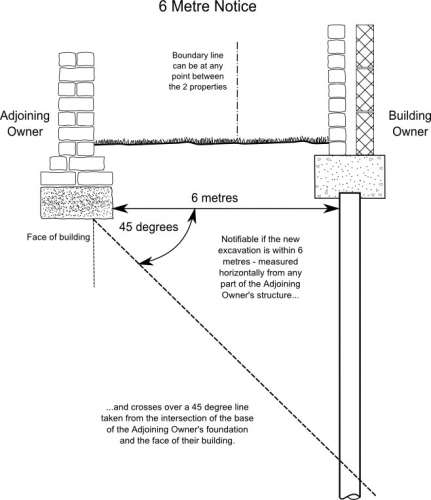
You generally need a Party Wall Contract if your prepared jobs influence shared wall surfaces, limits, or include excavation near a neighbor''s property. This makes certain both celebrations agree on the work and prospective influences prior to it starts.
What Should Be Consisted Of In My Celebration Wall Surface Notification?
Such contracts are vital due to the fact that they plainly specify ownership and maintenance commitments, assisting to stop disagreements between surrounding proprietors. Past personal privacy, event walls are normally built with soundproofing and fireproof materials to boost home security and reduce sound transmission. Recognizing neighborhood regulations and building codes is imperative, as they govern the construction and maintenance of these wall surfaces.Understanding Agreements For Neighbours Sharing Wall Surfaces
Part 3 of the Environmental Management Act 1990 places a duty on a neighborhood authority to check out issues of statutory annoyance from individuals living within its area. This includes complaints concerning noise and dirt from structure job where it unreasonably hinders the use or enjoyment of their facilities or is biased to their wellness. If constructing job impacts an event structure, you must offer notification at the very least two months before job begins. ContributionIn some jurisdictions, an adjacent landowner who uses a wall surface constructed partially on his or her land by the other adjoining landowner has no task to add to the expense of building of the wall. If there is no proof of the problems under which the wall was built, courts assume that everyone possesses as much of the wall as is positioned on his home and has no obligation to add to the various other's wall.- Additionally, attic rooms and cellars can include celebration walls, using added insulation and soundproofing.
- Thankfully, this is one location of real estate law that has actually been very carefully defined.
- Removing a celebration wall surface commonly calls for authorization from both homeowner, as it influences common building rights.
- In doing so, the owner has to not harm the adjacent residential or commercial property or impair the easement to which the proprietor is qualified.